Rodent poop is a serious health risk
RODENT CONTROLPATHOGEN CARRIERS
2 min read
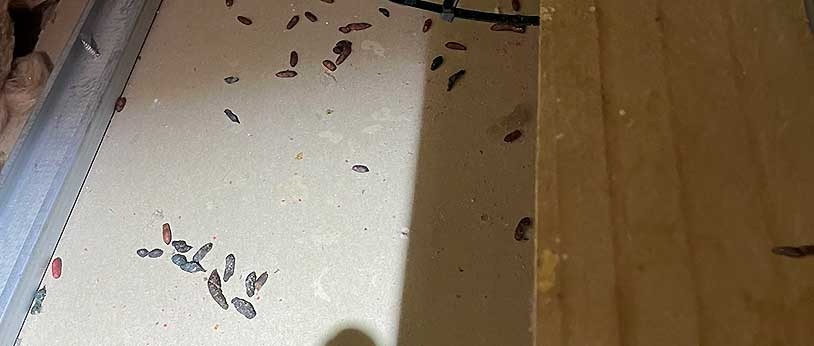
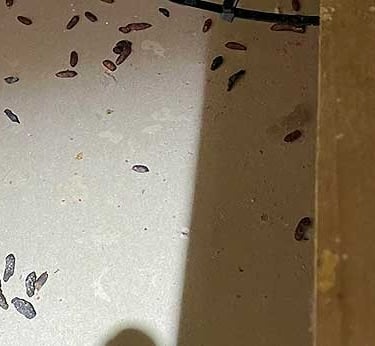
Rodent poop is a serious health risk
When rats or mice move in, they leave behind more than chewed wires and droppings. Their wee, poop, and nests carry harmful pathogens you can catch from airborne particles, they trigger allergies, smell awful and contaminate your home or business.
Common pathogens found in rodent droppings include:
Hantavirus Pulmonary Syndrome (HPS): Transmitted via inhaling dust from dried, contaminated rodent urine and droppings, causing serious, sometimes fatal, respiratory failure.
Salmonellosis: A bacteria in droppings dust ingested or inhaled that causes severe food poisoning (fever, diarrhea, vomiting) when it contaminates surfaces or food.
Leptospirosis: A bacterial disease spread through urine and contaminated water or surfaces, that when ingested or inhaled causes kidney damage, meningitis, and liver failure.
Lymphocytic Choriomeningitis (LCMV): A viral disease causing neurological issues, often spread by house mice, pathogen transferred by ingestion or inhalation.
E. coli: Ingestion or inhalation of dust causes severe gastrointestinal issues, including diarrhea, cramps, nausea, and vomiting.
Campylobacter: Ingestion or inhalation of dust results in a gastrointestinal infection with diarrhea (often bloody), fever, and severe abdominal pain.
Hepatitis E (HEV): This is a distinct strain of hepatitis E that primarily infects rats but can be transmitted to humans via inhalation or ingestion. Symptoms can include fever, nausea, fatigue, jaundice, and an enlarged liver.
Various parasites and allergens that can aggravate asthma.
Be careful - don’t rush in
Before you start cleaning, take a minute to protect yourself:
Wear rubber gloves and a particle mask (ideally N95).
Never sweep or vacuum dry droppings - this can send harmful pathogens airborne.
Open windows and doors where possible and let the area air out for at least 30 minutes.
Cleaning up after rats and mice
Wear your protective safety gear as above.
Soak, but don’t disturb droppings
Using a misting hand-pump, spray droppings, urine, and nesting materials with disinfectant. Let it sit for at least 10 minutes.
Pick it up
Use paper towel to pick everything up once it’s dampened. Dispose of all waste in a sealed bag, then double-bag it.
Clean the lot
Wipe down nearby surfaces; floors, benches, storage areas, roof beams and floors, anything they may have touched, with disinfectant. Wash contaminated fabrics on a hot cycle.
Don’t spread the problem
Don't reuse any of your cleaning gear. Avoid vacuuming.
That lingering smell?
Rodent urine has a habit of hanging around long after the clean-up. Rodent wee is exceptionally strong and pungent because it is highly concentrated to conserve water, containing high levels of urea and proteins. As the urine dries, bacteria decompose this urea, releasing sharp ammonia fumes. It is used for communication and territorial marking, becoming especially intense with heavy or long-standing infestations.
Use an enzyme-based cleaner to break down the source of the smell
Treat all affected surfaces thoroughly and let them dry properly
Repeat on porous surfaces like wood or concrete if needed
Bleach alone won’t remove the odour as bleach only disinfects
If the smell still won’t budge, try a professional cleaning service. But ultimately, materials like insulation, carpet underlay, or even sections of drywall may need replacing, if your rodent infestation has been going on a while.
Call us to eradicate your rodent issue as soon as you notice them, to prevent these risks to your business or family.
Button Pest Control
0485 522 559
info@buttonpestcontrol.com.au
PO Box 547, Pakenham, VIC 3810
Licenses: L010955 / L012918
ABN: 52 596 097 818
© 2026. All rights reserved.
Website by Dawn Button - Button Pest Control